


Not every cloakroom needs automation. A small restaurant with a short coat rack and low guest volume may work perfectly well with a traditional manual system. Automation becomes valuable when staff spend too much time walking, searching, or moving through a crowded storage room during the same short peak periods. The goal is not to replace people. It is to reduce the unproductive movement between the guest counter and the stored garment.
This guide compares a conventional manual cloakroom with an automatic or powered coatroom workflow. It focuses on the operational reasons to automate: shorter retrieval paths, more organized storage, predictable numbered positions, and better use of room space.
How a manual cloakroom works
In a manual room, staff accept a coat, attach or assign a number, walk to a rack, choose a location, and later walk back to retrieve it. This can be efficient when the room is small and the storage density is low. The problem appears when the coatroom grows. More racks create more walking. Bulky winter coats make aisles tighter. Temporary staff may not remember where sections are located. During event departure, several employees may be moving through the same narrow storage space at once.
What automation changes
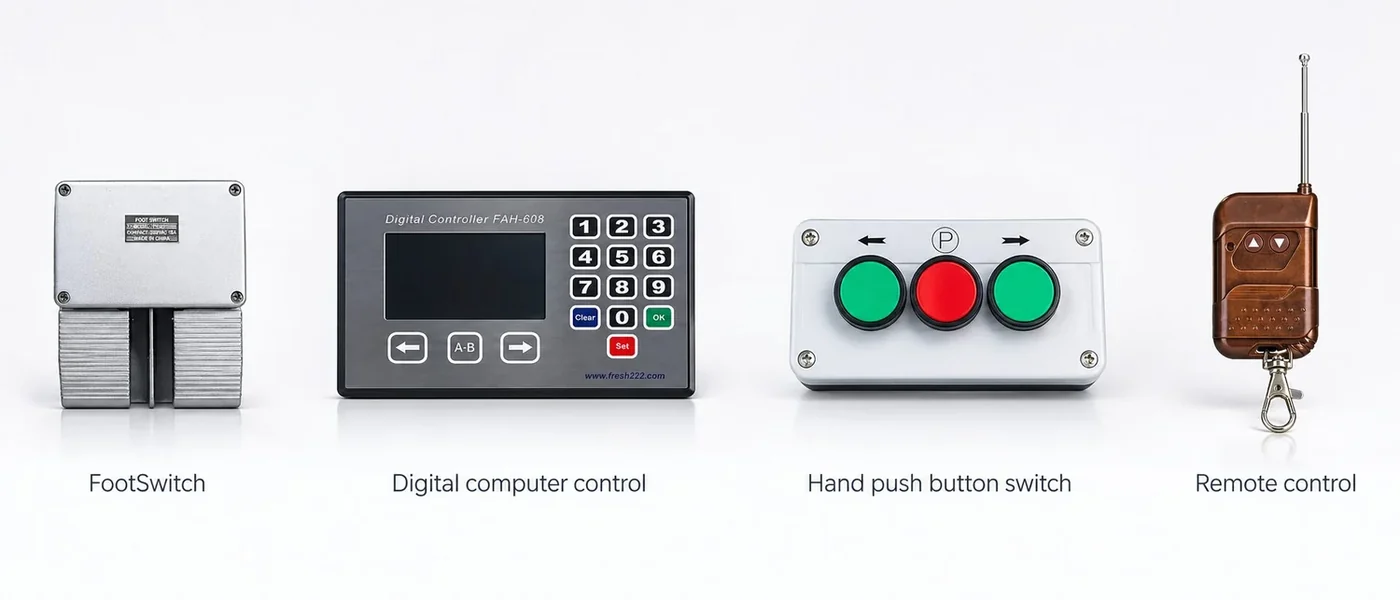
A powered garment conveyor moves the storage positions while the operator stays closer to the service point. Numbered positions can make the relationship between guest ticket and storage location more consistent. A digital controller can bring a selected position to the operator. These changes do not eliminate the need for an organized staff process, but they can reduce the distance and search effort required for each transaction.
- Less staff walking between the counter and remote racks.
- More predictable numbered storage locations.
- Better use of vertical or perimeter space.
- Faster training for staff when the position logic is clear.
- Potential for search controls or future ticket integration.
- Cleaner expansion when coat capacity grows.
When automation is likely to pay off
Automation is most useful when the coatroom has a concentrated peak. The classic example is a theater, event venue, conference center, casino, entertainment facility, or large club where many guests leave at nearly the same time. Another good case is a room where staff walk a long distance for every retrieval or where conventional racks cannot use the available room efficiently.
If the only problem is insufficient storage, a denser rack layout may be enough. If the main problem is retrieval time and staff travel, a powered conveyor can have a much larger operational impact.
Compare the workflow with a simple time study
Watch a busy period and estimate how long staff spend walking, searching, and returning to the counter. Count how many steps are required for a typical coat. Note whether employees cross each other's paths or wait for access to a crowded aisle. This simple observation usually reveals whether the bottleneck is storage capacity, room layout, staff training, or actual retrieval distance.
If most transaction time is spent walking to the rack, automation may help. If most time is spent discussing lost tickets or confirming ownership, the first improvement may need to be the identification process instead.
Levels of automation
The first level is simply a powered conveyor with manual controls. The second level adds numbered search so staff can call a position directly. A more advanced project can add ticket scanning or software records. The correct level depends on the event volume and staff workflow. A simple powered conveyor may create most of the benefit in a moderate-volume room, while a large venue may justify more automation.
Room and garment requirements still matter
No control system can compensate for a poor physical layout. The room still needs enough clearance for garments, a convenient service point, proper capacity, and safe access. Winter coats, long garments, and bags can reduce the number of items that fit comfortably. The ceiling height may allow multiple storage levels, but the longest garment must be checked before assuming a two-tier layout.
A simple go / no-go decision
Automation is a good candidate when the cloakroom has enough volume or walking distance that staff movement is a visible part of the wait. It is less compelling when the storage room is tiny, traffic is light, and the current manual racks are already easy to search. Compare the expected peak, the distance walked per transaction, and the cost of using more floor area for conventional racks.
Also consider growth. A venue that is expanding, adding events, or expecting heavier winter traffic may benefit from a conveyor before the existing room becomes a serious bottleneck. If demand is uncertain, a straightforward powered conveyor with simple controls can be a practical first phase, with numbered search or software added later only if the operation proves it needs them.
Frequently asked questions
Does an automatic cloakroom mean no staff?
No. Most commercial coatrooms still use staff. Automation mainly reduces walking and helps organize retrieval.
Can a manual cloakroom be upgraded?
Yes. A powered conveyor can often be introduced as the main storage system while the familiar guest ticket process remains in place.
Do I need software?
Not always. A numbered controller may be enough. Software becomes useful when the venue needs more detailed records or integration.
What information should I send for planning?
Send room dimensions, ceiling height, approximate coat capacity, longest garments, counter location, and an estimate of peak guest volume.