




TOWEL ISSUE, RETURN & STORAGE GUIDE
Smart Towel Locker Capacity Planning should be planned around the real workflow. A smart locker can simplify towel control when the site wants clean distribution, used return, user identification and staff alerts in one place. The most successful projects stay simple at the start and add features only when needed.
Manage clean issue and used return as one cycle
The main purpose of smart locker is to create control without making service inconvenient. That means a site should design clean-towel issue and used-towel return together. If one side is organized and the other is not, inventory will quickly drift and staff will spend time correcting avoidable problems.
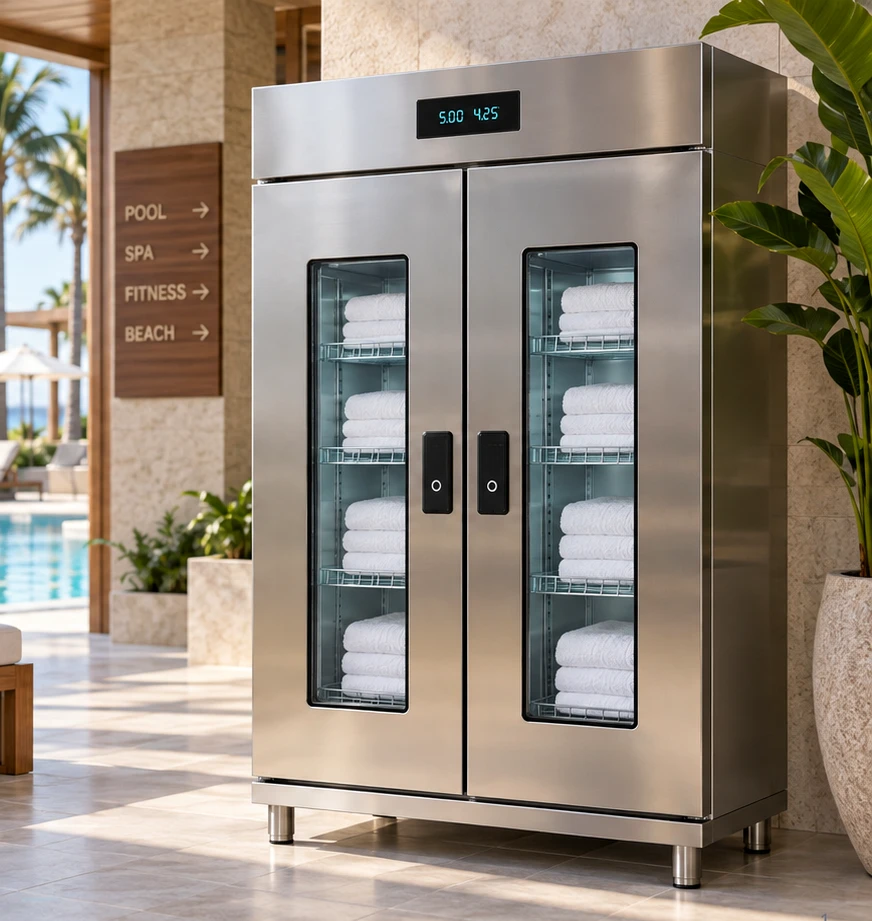
Whether the site uses a cabinet, locker or another controlled distribution point, the underlying principle stays the same: clean stock should be protected, the user or transaction should be defined as needed, and the return path should be obvious.

Core workflow of a controlled towel-storage solution
- Load clean stock into the designated compartment or storage zone.
- Authenticate or supervise access according to the site policy.
- Issue towels in a controlled manner instead of unlimited pickup.
- Guide the user to the return point for soiled items.
- Alert staff when clean stock is low or the return side is full.
- Maintain inventory records so management knows what is available and what requires replenishment.
This workflow can remain simple at the beginning and still become more sophisticated later if the business needs more reporting or integration.
Why controlled access can improve service
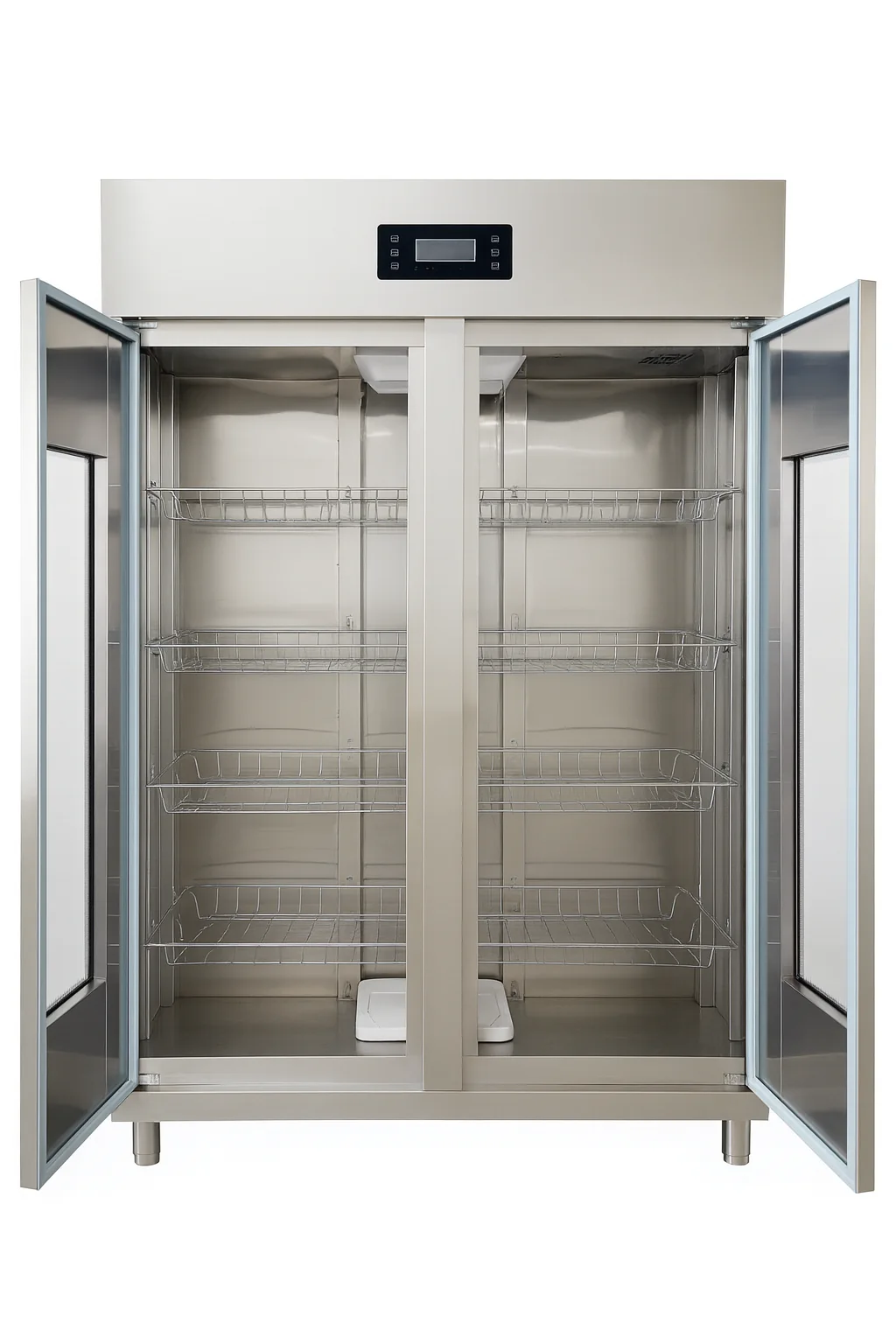
Some businesses worry that adding control will slow down service. In practice, a well-designed system can make service more consistent. Clean stock is easier to monitor, members or guests know where to go, staff receive timely alerts and the property avoids the frustration of empty shelves or overflowing return bins.
Controlled issue also makes it easier to scale operations because the process becomes repeatable instead of relying on each employee to handle towel distribution differently.
Decide how much accountability the site really needs
Not every site needs the same depth of user-level accountability. Some facilities only need better stock control and organized issue. Others need member or room association, event history or broader integration. The right first phase depends on that operational requirement.
A modular system is useful because it allows the project to start with the shortest workable solution and expand later without replacing the original cabinet or reader hardware.
Locker, cabinet or staffed counter?
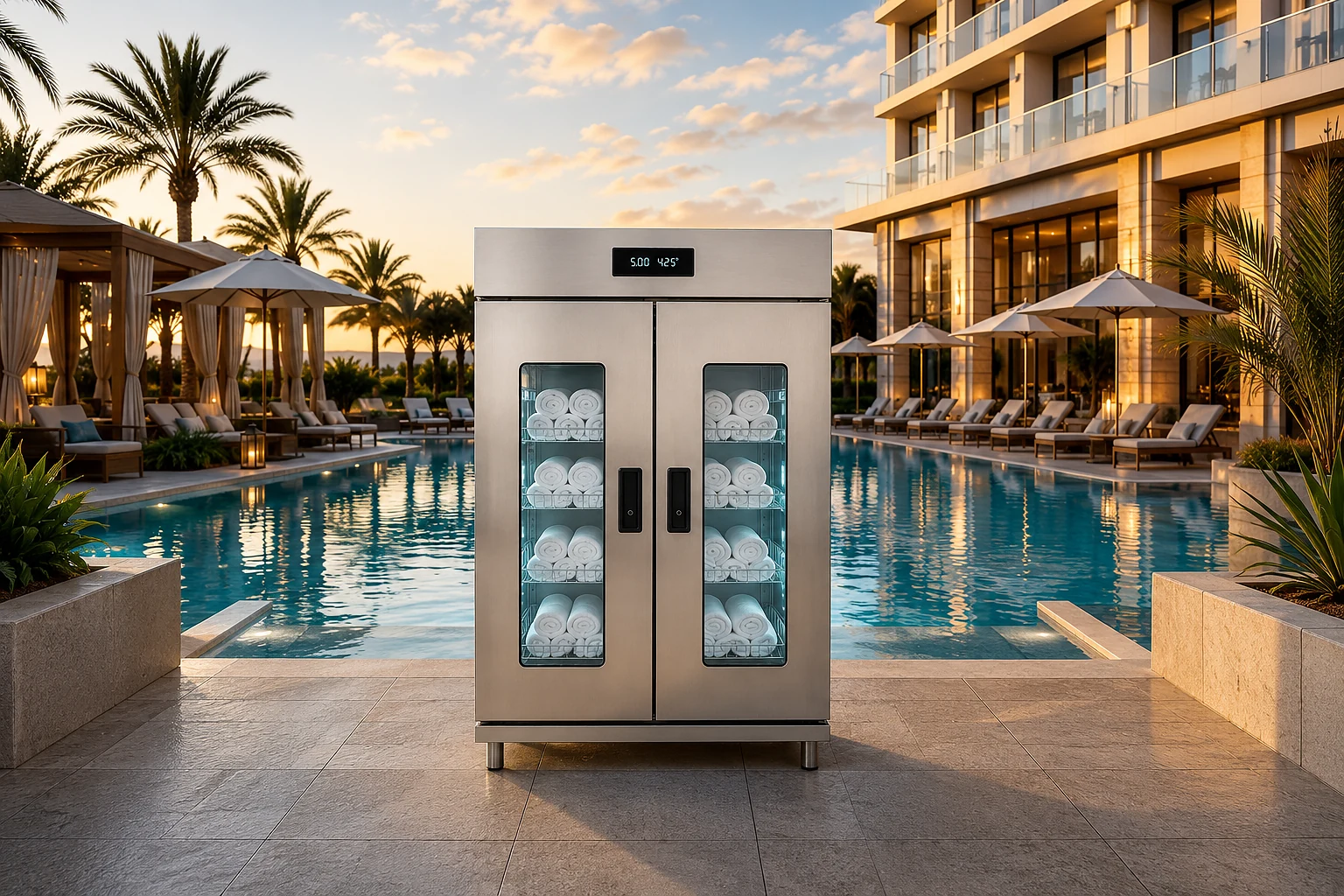
The right controlled-issue method depends on the environment. A self-service club may prefer a smart locker or cabinet. A hotel may want staff-assisted distribution with better stock visibility. A mixed environment may need both. The decision should reflect staffing, service expectations and the level of accountability the site wants to maintain.
What matters most is that the chosen method still supports a clear return path and a practical restocking routine.
Usage patterns can improve replenishment
Once a towel-control workflow is in place, even basic reporting can reveal when demand peaks, which areas run low fastest and how often staff must refill clean stock. That information helps management plan labor and restocking more intelligently instead of reacting only when shelves are empty.
Better replenishment improves both service and loss control because stock levels become more predictable.
Common mistakes with towel lockers and controlled issue
Ignoring the return side
Used-towel collection is as important as clean-towel issue.
No staff alerting
If low-stock or full-return conditions are not communicated, service problems continue.
Overengineering phase one
Begin with the essential functions and add more only when they have clear value.
No stock maintenance process
Even a smart locker needs a practical restocking and counting routine.
Assuming every site needs the same access method
Member clubs, hotels and staff-only sites can require different authentication policies.
What to include in a towel-locker or cabinet inquiry
Helpful inputs include how many users access towels daily, approximate towel quantity, whether access is member-based or room-based, whether used returns are required in the same unit, what alerts staff would like, whether the site needs integration and how much physical space is available.
This page targets the informational search intent around smart locker. Current Fresh USA commercial package details, pricing and configurator logic remain on the main product pages.
Smart Locker for Towels: Planning Guide FAQ
Can one locker hold both clean and used towels?
Yes, when the design uses clearly separated compartments or workflow zones.
Does the system always require member identification?
No. Some projects only need controlled access and stock awareness.
Can a simple system be expanded later?
Yes. A scalable architecture can add software, alerts, more readers or integrations later.
Why are low-stock alerts important?
Because they help staff replenish before service quality drops.
Is a smart locker only for gyms?
No. Similar logic can work in hotels, spas, pools and other textile-distribution environments.
Smart Towel Locker Capacity Planning: project inputs to define first
Before comparing equipment, document item type, quantity, issue point, return point, storage, laundry handoff, monitored exits and the staff response when an exception occurs. The purpose of this step is to turn a broad idea into an operating requirement that can be tested. A quotation is much easier to compare when every option is measured against the same workflow instead of against a different marketing claim.
For smart towel locker capacity planning, write down who uses the system, what a normal successful event looks like, what should happen when something is denied or missing, and who is responsible for maintaining users, items or settings after installation. These details reduce surprises during commissioning and help keep the first phase appropriately simple.
- Define the normal operating sequence from start to finish.
- List the physical dimensions or capacity limits that affect the project.
- Separate must-have functions from features that can wait for a later phase.
- Identify the staff member or team responsible for day-to-day administration.
- Decide what information must be recorded and what can remain standalone.
- Write a short acceptance test before equipment is ordered.
Test the real workflow before full rollout
Before full deployment, test normal issue, normal return, missing items, authorized removal, busy periods, laundry transfers and the way staff resolve an exception without slowing normal users. A useful test is based on the actual site and representative users or items. It should confirm not only that the equipment works, but that the entire operating sequence is understandable and repeatable for the people who will use it every day.
A well-defined smart towel locker capacity planning setup should be tested with representative users, items and normal exception cases before full rollout. Record the working settings, physical positions and staff steps that produced the accepted result. That baseline is valuable later when equipment is moved, expanded or serviced.
Measure the result and keep expansion simple
After launch, review return rate, unresolved shortages, stock accuracy, replenishment effort and how quickly staff can investigate a missing item. The first objective is to confirm that the original operating problem improved. If the process is already working, expansion should add a specific missing capability rather than complexity for its own sake.
Documenting this workflow makes training, troubleshooting and future expansion easier. A later phase may add software, more control points, additional storage, reports or integrations, but those additions should build on a workflow that already works reliably.
For related planning material, continue to the towel and textile guides. Keeping related pages connected also helps staff and buyers move from a broad planning question to the specific system they actually need.
Planning questions
Should the first phase include every possible feature?
No. Start with the functions required to solve the current operating problem. Add optional reporting, additional zones or integrations when there is a clear reason for them.
What information is most useful before requesting a quote?
Send site dimensions, representative photos, approximate volume, the normal workflow, the exception you want to control and any existing equipment that the new system must work with.
How should future expansion be handled?
Keep the original acceptance criteria and working settings. Expand from that baseline so new hardware or software adds a defined function without replacing parts that are already doing their job.