





TEXTILE INVENTORY WORKFLOW GUIDE
RFID Textile Inventory Workflow should be planned around the real workflow. Textile inventory is reliable only when the database follows the real movement of towels, linen and uniforms. The technology can speed up counting, but the operating process still decides whether the result is trusted. A practical RFID textile inventory workflow begins by mapping issue, use, return, storage and the point where exceptions occur.
RFID Textile Inventory Workflow: Map the textile lifecycle before buying hardware
List every meaningful stage: clean storage, issue, active use, return, soiled holding, laundry processing and restocking. A count has value only when staff know what each location or status means. This map also reveals where a fixed read point may help and where a handheld count is simpler.
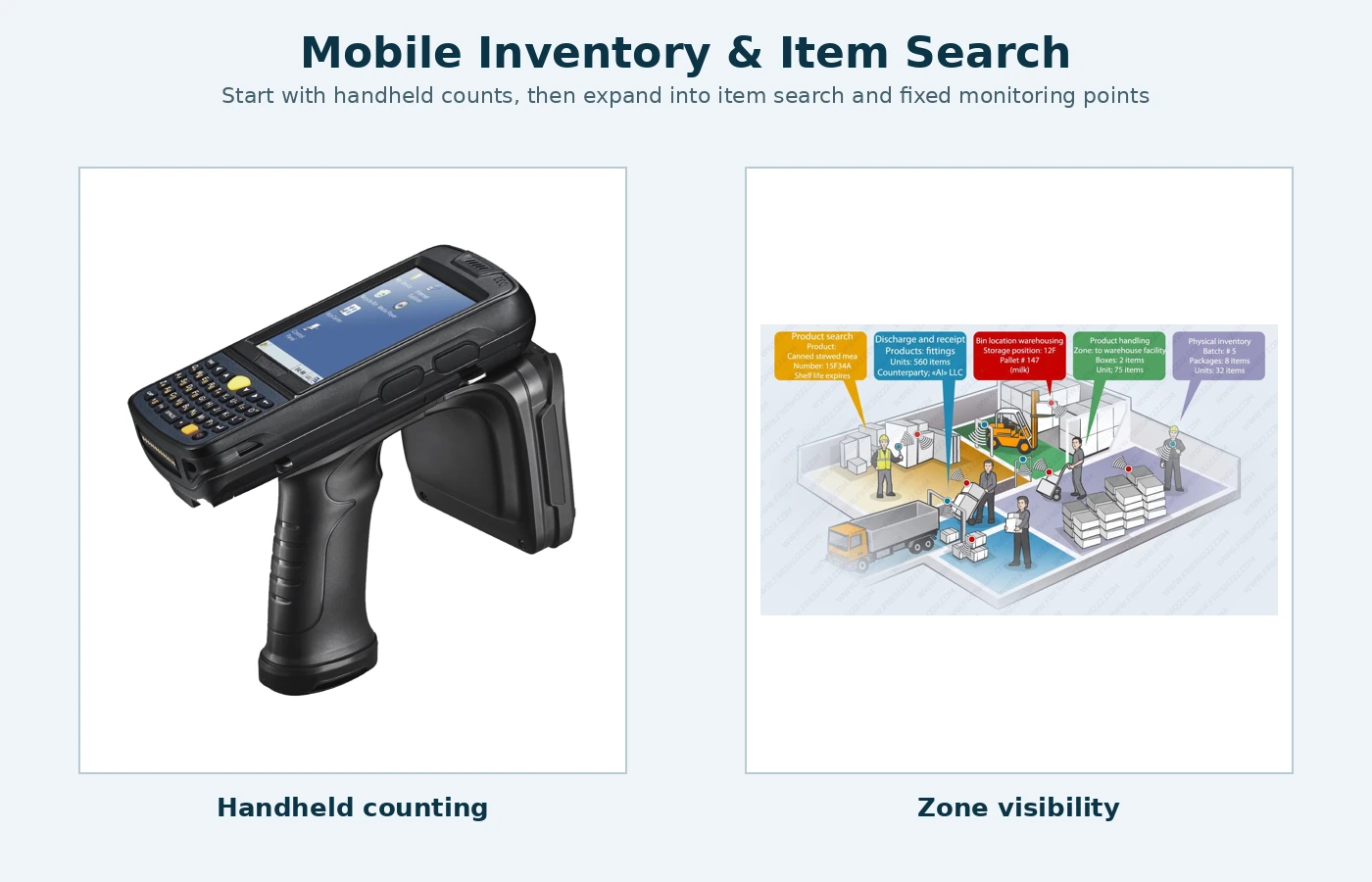
Handheld counts are often the best first step
A handheld reader can support periodic room, cart or shelf inventory and can help locate a specific registered item. It does not require every doorway to be automated on day one. For many operations, this is the lowest-risk way to establish a clean database and a repeatable counting routine.
- Define named count zones.
- Set a realistic count frequency.
- Assign responsibility for investigating discrepancies.
- Keep retired or damaged items from remaining active in the database.
Fixed read points answer movement questions
A fixed reader at a selected doorway can create automatic movement events when the workflow needs them. That is different from a handheld physical count. Use fixed points at locations where automatic history changes an operating decision, such as a controlled issue room or a known loss point, rather than installing readers everywhere.
The laundry process drives tag selection
Textile tags must survive the actual cleaning and finishing process. Temperature, pressure, chemicals, mechanical stress and tag placement all matter. The inquiry should therefore include whether laundry is internal or outsourced and what items are being tagged. A tag that works on one towel program may not be the right choice for a different textile process.
Exception handling keeps inventory believable
Every operation needs a rule for missing, damaged, retired and unrecognized items. If staff simply recount until the numbers look right, the database will drift. Record the reason for adjustments and periodically review items that remain in an unexpected status for too long.
A practical textile inventory request
Send item categories, approximate quantities, number of storage locations, laundry process, count frequency and whether specific-item search is required. Explain whether the goal is periodic inventory, movement history, loss reduction, employee issue or a combination. That information determines whether phase one should be handheld, fixed or mixed.
Related planning guides
A practical commissioning example
A good textile inventory pilot uses a small but representative group of items and follows them through the real cycle: clean storage, issue, use, return and laundry. Count the same group at several stages and compare the system result with a manual control count. This exposes tag placement, handling and location problems before thousands of towels or uniforms are registered. It also teaches staff what a location or status means in the database, which is often more important than the speed of the first demonstration.
How to validate the workflow before full rollout
Choose several clean items, several used or returned items and a few deliberately misplaced items. Verify periodic counting, specific-item search if required and the procedure for damaged or retired textiles. If a laundry process is involved, validate the chosen tag and attachment method against the actual processing conditions rather than assuming every textile tag is interchangeable. Document the counting route so different employees can repeat the same audit.
Decisions to make before ordering
- Which textile types and quantities are in scope?
- What locations or statuses need to be distinguished?
- Is the primary task counting, finding one item or recording movement?
- Who resolves discrepancies after a count?
- What wash and finishing conditions must the tag survive?
Write these answers into the project scope before comparing equipment. They create an acceptance target for the installer and a training reference for the employees who will use the system later. If one of the answers changes, update the scope before adding hardware so the installation continues to solve the operating problem described on this page.
Project handover and future expansion
For rfid textile inventory for towels, linen and uniforms, keep a short handover record with the final layout, equipment locations, naming convention, normal operating steps and the person responsible for routine changes. Record the settings that were proven during acceptance instead of relying on memory. This makes later service, staff training and expansion much easier.
Expansion should follow a new operational requirement: another entrance, a larger inventory, additional reports, a new department or a need for remote visibility. Add the smallest component that solves that new requirement while preserving the working first phase. A modular project is valuable because the original installation remains useful rather than becoming a disposable pilot.
Recommended implementation sequence
Roll out textile inventory by location. Start with one clean store, cart group or department and create a verified opening list. Train staff to follow the same count route and to separate missing, damaged and retired items. Once repeated counts agree with the physical stock, add the next location or an automatic doorway point. This creates confidence in the database before it becomes large.
When a discrepancy appears, investigate it while the movement is recent. Search nearby locations, review issue/return activity if recorded and correct the item status rather than simply editing the total. A reliable exception process is what turns a fast count into useful inventory control.
Frequently asked questions
Can we start without doorway readers?
Yes. Many textile projects begin with handheld counting and item search.
Does every towel need an individual identity?
That depends on the workflow. Individual identity is useful when item-level history matters; some operations only need category or quantity control.
Can textile tags be washed?
Laundry tags are designed for textile processing, but the exact tag must match the actual wash and finishing conditions.
Can fixed readers and handheld readers use the same database?
They can be planned as parts of the same inventory workflow when the selected hardware and software are compatible.