





STEP-BY-STEP TOWEL LOSS REDUCTION
Towel Theft Prevention Plan should be planned around the real workflow. Towel theft protection works better as a sequence of small improvements than as a single expensive project. This guide shows how to move from basic counting and return discipline to controlled issue or monitored exits only when the previous step is not enough. A practical towel theft prevention plan workflow begins by mapping issue, use, return, storage and the point where exceptions occur.
Towel Theft Prevention Plan: Use a staged improvement plan
Stage one is a reliable baseline and a clear return point. Stage two may add staff accountability or periodic inventory. Stage three can add exit monitoring or controlled dispensing at the specific place where loss continues. Software, alerts and additional readers belong after the basic process is working.
Find the loss point before adding technology
Count where towels are available, where they are issued, where used towels are returned and where unexplained losses appear. A facility that loses towels from an uncontrolled pool deck has a different problem from a hotel that has poor room-to-laundry reconciliation. The control should be placed at the step that creates the loss, not simply at the easiest doorway to wire.
- Establish a starting inventory.
- Separate clean stock from used returns.
- Identify uncontrolled exits or transfer points.
- Record how often replenishment happens.
- Define who investigates a shortage.
Do not automate a broken return process
If guests cannot easily find the used-towel bin, or if staff do not reconcile clean and returned stock, a sophisticated monitoring system will still produce confusing numbers. Fix the physical flow first so every technology event has a clear operational meaning.
Use the simplest control that changes behavior
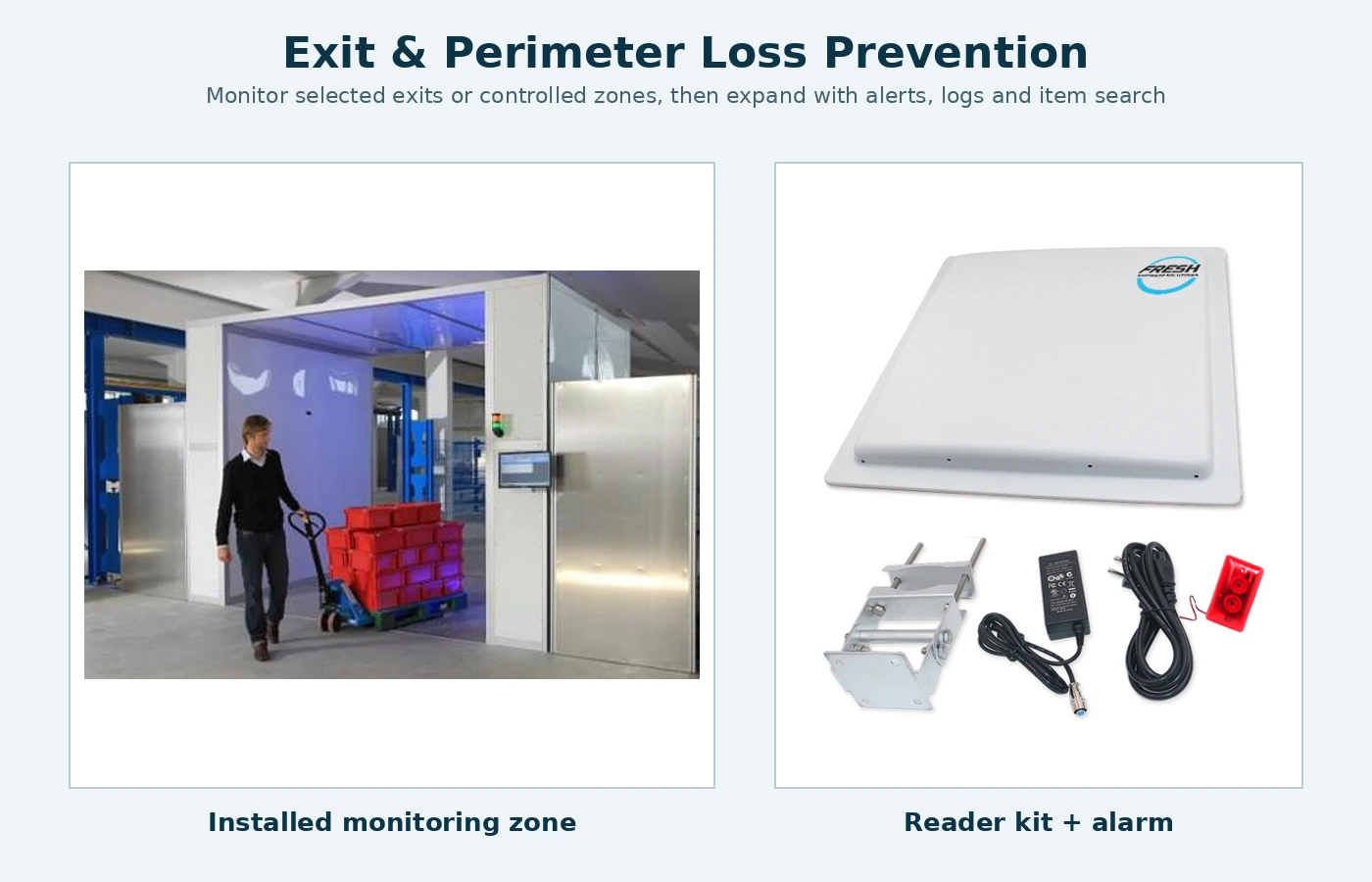
Some sites need only a local exit alarm. Others benefit more from controlled towel issue, inventory counts, event records or staff notification. A larger system is not automatically better. Start with the control that directly addresses the observed loss pattern, then add software or additional readers if the data shows a reason. The towel theft prevention plan process should be easy for staff and users to follow during normal daily operation.
Measure the result with operating numbers
Set a target such as a reduction in monthly replacement purchases or unexplained missing towels per thousand towel issues. Review the result after each stage before adding the next control.
Common reasons towel-loss projects underperform
- No reliable baseline before the system is installed.
- Staff are unsure what to do when an alarm or discrepancy occurs.
- Clean and used towels are mixed in the same operational count.
- The protected exit is not the actual route where most loss occurs.
- Technology is added without fixing an easy uncontrolled pickup or return process.
- The project promises “zero loss” instead of setting a measurable reduction target.
What to send for a recommendation
Describe the facility type, approximate towel quantity, number of clean issue points, used-towel return points and exits where towels can leave. Include photos or dimensions of the suspected loss point and explain whether you need only a local alarm, inventory, controlled dispensing or event history. This lets the first proposal stay focused on the real problem.
Related planning guides
A practical commissioning example
A staged project might begin with weekly counts and a clearly placed return bin. If unexplained loss remains high, the next step could be a controlled issue point or one monitored exit. Only after that evidence is available would it make sense to add deeper software, more exits or mobile alerts. This sequence makes the result of each change visible and prevents a facility from installing several controls at once without knowing which one actually improved the numbers.
How to validate the workflow before full rollout
Keep the same baseline metric through every stage—for example, replacement towels per thousand issues or unexplained missing pieces per week. Document the date each operational change is introduced and avoid changing several unrelated procedures on the same day when possible. Review with the staff who count and replenish towels because they can usually identify whether a numerical change reflects real loss or a change in counting practice.
Decisions to make before ordering
- What is the least expensive process change that can be tested first?
- Which metric will remain consistent through every stage?
- At what result would the facility decide not to add more equipment?
- Which next control directly addresses the remaining loss point?
- Who owns the review of results after each stage?
Write these answers into the project scope before comparing equipment. They create an acceptance target for the installer and a training reference for the employees who will use the system later. If one of the answers changes, update the scope before adding hardware so the installation continues to solve the operating problem described on this page.
Project handover and future expansion
For how to improve towel theft protection step by step, keep a short handover record with the final layout, equipment locations, naming convention, normal operating steps and the person responsible for routine changes. Record the settings that were proven during acceptance instead of relying on memory. This makes later service, staff training and expansion much easier.
Expansion should follow a new operational requirement: another entrance, a larger inventory, additional reports, a new department or a need for remote visibility. Add the smallest component that solves that new requirement while preserving the working first phase. A modular project is valuable because the original installation remains useful rather than becoming a disposable pilot.
Recommended implementation sequence
Use a measured pilot instead of changing the whole facility at once. Begin with one towel type or one department and record a starting count, replenishment and known returns. Introduce the selected control at the suspected loss point and train the staff who will respond to it. Keep the same counting method during the pilot so the before-and-after numbers are comparable. Separate damaged or retired textiles from unexplained loss.
If the first control reduces the problem, standardize the procedure before adding more technology. If it does not, revisit the loss map rather than automatically adding more readers. The next investment should address a newly confirmed failure point such as uncontrolled issue, a second exit or poor return reconciliation.
Frequently asked questions
Can technology completely eliminate towel theft?
No system should be presented as guaranteeing zero loss. The goal is to reduce preventable loss and improve accountability.
Can a system work without a computer?
A compatible standalone exit-monitoring configuration can provide local detection and alarm without a continuously connected PC.
Should every door be monitored?
Usually not. Start with the exits or workflow points that actually create risk.
Should we install the full system at once?
Usually not. A phased approach makes it easier to see which control actually reduces loss and keeps the project scalable.